MSP430G2252IPW14
Active16 MHZ MCU WITH 2KB FLASH, 256B SRAM, 10-BIT ADC, COMPARATOR, SPI/I2C, TIMER
MSP430G2252IPW14
Active16 MHZ MCU WITH 2KB FLASH, 256B SRAM, 10-BIT ADC, COMPARATOR, SPI/I2C, TIMER
Description
General part information
MSP430G2252 Series
The Texas Instruments MSP430 family of ultra-low-power microcontrollers consist of several devices featuring different sets of peripherals targeted for various applications. The architecture, combined with five low-power modes, is optimized to achieve extended battery life in portable measurement applications. The device features a powerful 16-bit RISC CPU, 16-bit registers, and constant generators that contribute to maximum code efficiency. The digitally controlled oscillator (DCO) allows wake-up from low-power modes to active mode in less than 1 µs.
The MSP430G2x52 and MSP430G2x12 series of microcontrollers are ultra-low-power mixed signal microcontrollers with built-in 16-bit timers, and up to 16 I/O capacitive-touch enabled pins and built-in communication capability using the universal serial communication interface and have a versatile analog comparator. The MSP430G2x52 series have a 10-bit A/D converter. For configuration details see . Typical applications include low-cost sensor systems that capture analog signals, convert them to digital values, and then process the data for display or for transmission to a host system.
The Texas Instruments MSP430 family of ultra-low-power microcontrollers consist of several devices featuring different sets of peripherals targeted for various applications. The architecture, combined with five low-power modes, is optimized to achieve extended battery life in portable measurement applications. The device features a powerful 16-bit RISC CPU, 16-bit registers, and constant generators that contribute to maximum code efficiency. The digitally controlled oscillator (DCO) allows wake-up from low-power modes to active mode in less than 1 µs.
Technical Specifications
Parameters and characteristics for this part
| Specification | MSP430G2252IPW14 |
|---|---|
| A/D Channels | 8 count |
| A/D Resolution (bits) | 10 bit |
| Connectivity | I2C, USI, SPI |
| Core Processor | MSP430 CPU16 |
| Core Size (Bit Width) | 16 Bit |
| Mounting Type | Surface Mount |
| Number of I/O | 10 |
| Operating Temperature (Max) | 85 °C |
| Operating Temperature (Min) | -40 °C |
| Oscillator Type | Internal |
| Package Length | 0.173 in |
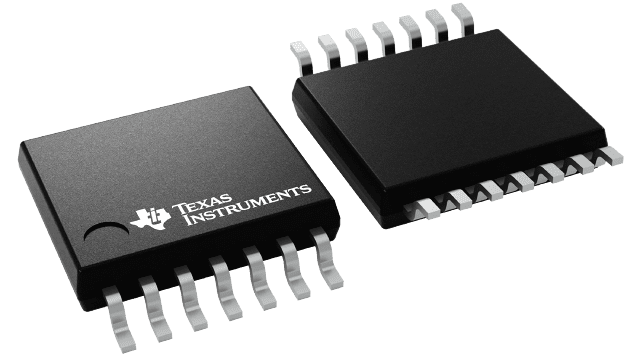
| Package Name | 14-TSSOP |
| Package Width | 4.4 mm |
| Peripherals | PWM, POR, Reset, WDT, Brown-out Detect, DMA |
| Program Memory Depth | 2 K |
| Program Memory Size | 2 KB |
| Program Memory Type | FLASH |
| Program Memory Width | 8 bit |
| RAM Size Depth | 256 |
| RAM Size Width | 8 bit |
| Speed | 16 MHz |
| Voltage - Supply (Vcc/Vdd) Maximum | 3.6 V |
| Voltage - Supply (Vcc/Vdd) Minimum | 1.8 V |
Pricing
Prices provided here are for design reference only. For realtime values and availability, please visit the distributors directly
Sign in to see pricing
Create a free account to access distributor pricing data.
CAD
3D models and CAD resources for this part
Documents
Technical documentation and resources