


MAX3665EUA+
Active622MBPS, ULTRA-LOW-POWER, 3.3V TRANSIMPEDANCE PREAMPLIFIER FOR SDH/SONET

MAX3665EUA+
Active622MBPS, ULTRA-LOW-POWER, 3.3V TRANSIMPEDANCE PREAMPLIFIER FOR SDH/SONET
Description
General part information
MAX3665 Series
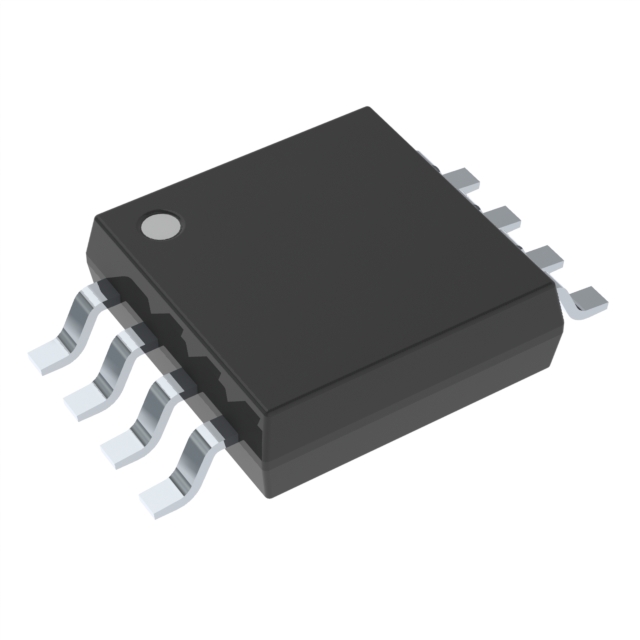
The MAX3665 low-power transimpedance preamplifier for 622Mbps SDH/SONET applications consumes only 70mW at VCC= 3.3V. Operating from a single +3.3V or +5.0V supply, it converts a small photodiode current to a measurable differential voltage. A DC cancellation circuit provides a true differential output swing over a wide range of input current levels, thus reducing pulse-width distortion. The differential outputs are back-terminated with 50Ω per side.The overall transimpedance gain is nominally 8kΩ. For input signal levels beyond approximately 50µAp-p, the amplifier will limit the output swing to 250mV. The MAX3665's low 55nA input noise provides a typical sensitivity of -33.2dBm in 1300nm, 622Mbps receivers.The MAX3665 is designed to be used in conjunction with the MAX3676 clock recovery and data retiming IC with limiting amplifier. Together they form a complete 3.3V or 5.0V 622Mbps SDH/SONET receiver.In die form, the MAX3665 is designed to fit on a header with a PIN diode. It includes a filter connection that provides positive bias for the photodiode through a 1.5kΩ resistor to VCC. The device is available in an 8-pin µMAX® package.ApplicationsPIN Photodiode Preamplifiers and ReceiversRegenerators for SDH/SONETSDH/SONET Receivers
Technical Specifications
Parameters and characteristics for this part
| Specification | MAX3665EUA+ |
|---|---|
| Applications | Optical Networks |
| Mounting Type | Surface Mount |
| Package Length | 0.118 in |
| Package Name | 8-uMAX/uSOP, 8-TSSOP, 8-MSOP |
| Package Width | 3 mm |
| Type | Transimpedance Preamplifier |
Pricing
Prices provided here are for design reference only. For realtime values and availability, please visit the distributors directly
Sign in to see pricing
Create a free account to access distributor pricing data.
CAD
3D models and CAD resources for this part
Documents
Technical documentation and resources